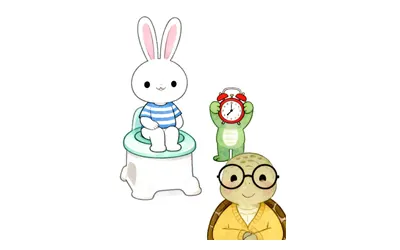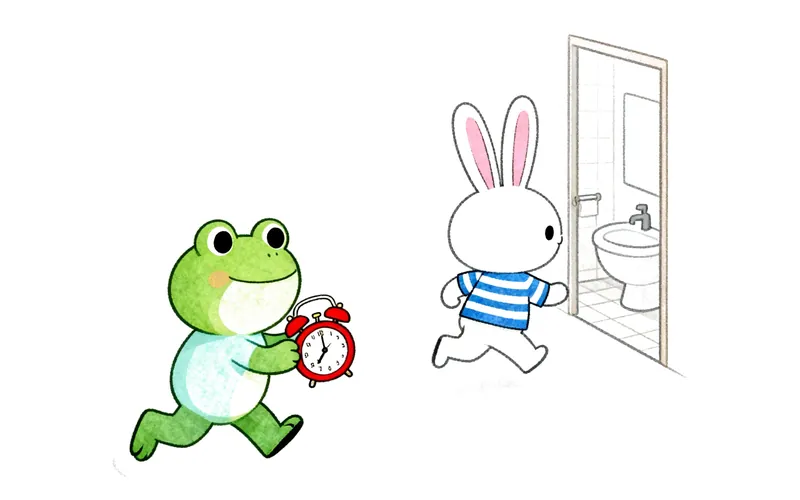
In short
- Use key moments: after waking, after meals, before outings, bath, and bed.
- Set a timer: every 1.5 hours on days 1–2, then 2 hours, then 2–3 hours.
- Sit for a few minutes, five at most, with a book or song.
- Announce potty time with a choice instead of asking 'Do you need to go?'
On this page
- Key moments: the times the body is more likely to need to go
- The timer: how often to take your toddler to the potty
- How to invite without asking "Do you need to go?"
- How long to sit on the potty
- The signs to watch for
- When the timer gets in the way
- What tends to backfire
- When to call the pediatrician
- A sample day
Parents often ask how often to take a toddler to the potty. The short answer: on a regular rhythm that starts tight and loosens as your child learns to notice their body. The plan below uses two tools, key moments and a timer, and it adapts to your child rather than the other way around. You are not aiming for a perfect schedule. You are aiming for many calm chances to practice.
Key moments: the times the body is more likely to need to go
Some times of day are simply more likely to produce pee or poop. Always invite your child to try at these moments, even if they say no.
- Right after waking up, in the morning and after a nap.
- After every meal. After breakfast is an especially good time for poop.
- Before leaving the house and when you arrive anywhere.
- Before nap, bath and bedtime.
- Before anything that will absorb them: a movie, the playground, a visit.
These moments do most of the work in the early days. They are predictable, they fit your day, and they do not depend on your child remembering anything yet.
The timer: how often to take your toddler to the potty
On top of the key moments, a timer sets regular invitations. You do not have to keep checking the clock, and the reminder comes from the timer rather than from you. Many children find it easier to listen to an alarm than to a grown-up.
| Days | Longest time between invitations |
|---|---|
| 1 and 2 | An hour and a half, at most |
| 3 and 4 | 2 hours |
| 5, 6 and 7 | 2 to 3 hours, and more and more when your child asks |
Every time your child pees in the potty, or there is an accident, restart the timer from zero. If your notes show they pee more often than the timer, for example every hour, set the timer a little earlier than that. The plan follows your child.
How to invite without asking "Do you need to go?"
"Do you need to pee?" almost always gets a "no," even when they are about to go. Instead, announce it and give a choice. This is one of the simplest changes you can make, and it pairs well with the wording in what to say when potty training.
- "The timer rang. Time to try. Do you want to hop like a bunny or waddle like a penguin?"
- "It's time to try. Do you want the potty or the big toilet?"
- "Pee before we go. Do you want to carry the book, or should I?"
If they say no, keep it light: "Okay. Finish that tower and then we'll go." Two minutes later, you go, no big deal. If they really resist, do not push: "Okay, we'll try in a little while." A fight in the bathroom does more harm than an accident in the living room.
How long to sit on the potty
A few minutes. Five at the most. A short book or a song is the perfect length. If nothing comes out: "That's okay, we'll try later," and back to playing. Keeping them sitting for a long time only makes the potty boring or feel like a punishment.
The signs to watch for
In the first few days, your best tools are your eyes. Watch for your child suddenly going still, crossing their legs, grabbing between their legs, dancing, hiding, going quiet, turning red or squatting. When you see it, do not ask. Say "Let's go to the potty!" and walk them there calmly. If you rush them, they get startled and it comes out sooner.
When the timer gets in the way
A timer is a support, not a rule. If your child starts telling you they need to go, follow them instead of the clock. You can also drop the timer when the days are mostly dry and the key moments are enough. This is the goal: your child notices, tells you, and you help. The timer is there to give them chances until that happens.
If your child never tells you but pees when you take them, they are on the right track. Their body is cooperating; telling you comes later. Keep the timer and key moments, and celebrate when they go on their own.
What tends to backfire
Some habits feel helpful in the moment but slow things down. Watch for these.
- Asking "Do you need to go?" over and over. It invites a no and turns the potty into a debate.
- Keeping your child on the potty for long stretches, or making them sit as a consequence.
- Sighing, scolding, or saying "again?" after an accident. Accidents are information, not defiance. The calm response is described in potty training accidents.
- Comparing your child to a cousin or a friend who is already out of diapers.
- Bribing with treats or toys to get them to sit. A sticker or a high-five for trying is enough.
- Rushing them to the bathroom when you see signs. Walk, do not drag.
When to call the pediatrician
Call your pediatrician if it hurts when your child pees, they cry when they try, or they seem unwell. These are reasons to check in, not to push harder with the schedule.
A sample day
A simple shape for the first days: potty right after waking, then breakfast, then a potty invitation. Set the timer for an hour and a half at most and play near the bathroom. Potty after lunch, then nap in a diaper, then potty when they wake up. Potty before bath and before bed. In between, watch for signs and restart the timer after every pee or accident. For the bigger picture of the first week, see how to potty train a toddler.
As the days go on, the timer stretches. By the end of the first week, you can go two to three hours between invitations, and longer when your child asks. Keep the key moments going for weeks. They are the habit that lasts.
Questions parents ask
How often should I take my toddler to the potty?
Start with a timer every hour and a half at most on days 1 and 2, then every 2 hours on days 3 and 4, and every 2 to 3 hours on days 5 to 7. Always add key moments like after waking, after meals, and before bed. Restart the timer after every pee or accident.
How long should a toddler sit on the potty?
A few minutes, five at the most. A short book or a song is the right length. If nothing happens, say "That's okay, we'll try later" and go back to playing. Long sits make the potty feel like a punishment.
What if my child says no when I ask if they need to go?
Skip the question. Announce that it's time and offer a choice, like "Do you want to hop like a bunny or waddle like a penguin?" If they still refuse, say "Okay, we'll try in a little while" and try again soon without a fight.
When can I stop using the timer?
Drop the timer when your child starts telling you they need to go, or when the days are mostly dry and the key moments are enough. The timer is a support, not a rule. Follow your child's cues.
What are signs my toddler needs to pee?
Watch for sudden stillness, crossing legs, grabbing between the legs, dancing, hiding, going quiet, turning red, or squatting. When you see these, walk them to the potty calmly instead of asking.
These guides are general information for parents. They do not replace your pediatrician's advice: if something worries you, ask.