In short
- A week of guidance, not a deadline: each day has one small goal.
- Use key moments plus a timer instead of asking 'Do you need to pee?'
- The same five-step accident routine all week, said calmly.
- At the end, a traffic light tells you whether to keep going or take a break.
On this page
Potty training a toddler works best as a calm, structured week of guidance, not a race to a deadline. The plan below gives each day a small goal: discover, practice, speak up, head out, trust, a bigger world, and finally celebrate and decide. Your child sets the pace; the plan sets the rhythm. Expect accidents, keep your voice steady, and treat every wet pair of underwear as information, not failure.
The two tools: key moments and a timer
Instead of watching the clock or asking all day, lean on two things.
Key moments are times when the body is more likely to need to go. Always invite a try:
- Right after waking up, morning and after nap.
- After every meal (after breakfast is a good time for poop).
- Before leaving the house and when you arrive anywhere.
- Before nap, bath, and bedtime.
- Before anything that will absorb their attention: a movie, the playground, a visit.
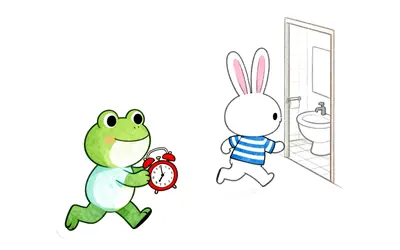
The timer adds regular invitations between key moments. It also takes the pressure off you: the clock is in charge, not a grown-up. Many children find it easier to respond to an alarm.
| Days | Longest time between invitations |
|---|---|
| 1 and 2 | 1.5 hours at most |
| 3 and 4 | 2 hours |
| 5, 6, and 7 | 2 to 3 hours, and longer as your child initiates |
Every time your child pees in the potty or has an accident, restart the timer. If your notes show they pee more often (say, every hour), set the timer a little earlier than that. The plan adapts to your child, not the other way around.
How to invite instead of ask
"Do you need to pee?" almost always gets a "no," even when they are about to go. Announce the try and offer a choice:
- "The timer rang. Time to try. Do you want to hop like a bunny or waddle like a penguin?"
- "It's time to try. Do you want the potty or the big toilet?"
- "Pee before we go. Do you want to carry the book, or should I?"
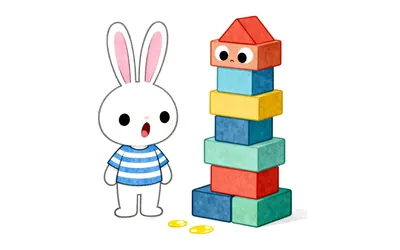
If they say no, keep it light: "Okay. Finish that tower and then we'll go." Two minutes later, go without a fuss. If they really resist, don't push: "Okay, we'll try in a little while." A fight in the bathroom does more harm than an accident in the living room. For more on what to say, see what to say when potty training.
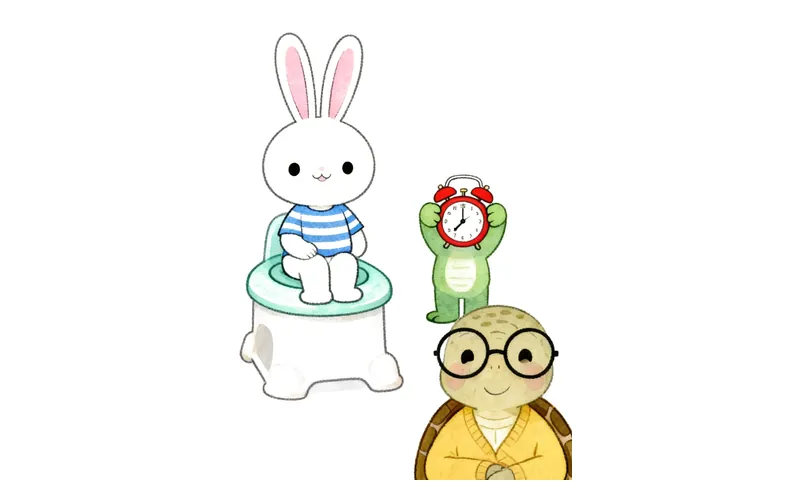
Sit for a few minutes, five at most. A short book or a song is the right length. If nothing comes out: "That's okay, we'll try later," and back to play. Long sits make the potty feel like a punishment.
The week, day by day
Days 1–3: at home
Day 1 – Discover. The goal is for your child to link the feeling of pee with the potty, not to get it right. Expect several accidents; they might not pee in the potty once, and the day still counts. In the morning, take off the nighttime diaper together and go straight to the potty. Let them pick underwear and put it on with your help: "Today you get to wear your new underwear. We keep them dry: pee goes in the potty." Set the timer, play near the bathroom, and watch for signs: going still, crossing legs, grabbing between the legs, dancing, hiding, going quiet, turning red, or squatting. When you see one, walk them to the potty calmly.
Day 2 – Practice. The goal is more pees in the potty and for your child to start stopping when they feel it coming. Day 2 can be harder than day 1; the novelty has worn off. Let your child set or turn off the timer. Play the pee race: practice running to the potty from different rooms, pants down, sit, count to three, pants up. If "no" is the word of the day, swap the timer for key moments for an hour, then bring it back. If they ask for a diaper to poop, offer a middle step: poop with the diaper on, but in the bathroom, or sitting on the potty with the diaper on. What matters is that they don't hold it in.
Day 3 – Speak Up. The goal is for your child to start telling you, with words or gestures, and for you to remind less. Many children tell you late at first: "pee!" when it's already coming out. That's a big step. Use the timer every 2 hours, and between times, watch instead of reminding. If you can, try a short 15–20 minute walk right after a pee in the potty, with spare clothes and no diaper. When you get home, offer the potty: the arriving pee.
Days 4–5: outings and trust
Day 4 – Head Out. The goal is to practice away from home. Use the going-out pee before you leave, pack two complete changes of clothes, wipes, bags for wet clothes, a travel potty or folding seat, and keep clothes easy. Plan where bathrooms are. Try a 45–60 minute outing in the morning and a second short outing somewhere different in the afternoon. If your child holds it the whole time and pees when you walk in the door, that's normal; offer the travel potty halfway through next time. For help with accidents away from home, see potty training accidents.
Day 5 – Trust. The goal is for your child to take the lead. Use the timer every 2 to 3 hours plus key moments, and in between, don't ask. If they can get their clothes down, let them go on their own and call you when done. Give poop special attention: five minutes after breakfast, feet supported and knees a bit higher than hips, a book, no rush and no screens. If you see them go up on tiptoe, squeeze their bottom, go stiff, cross their legs, or hide looking distressed, they may be trying not to poop. Ease the pressure; you can let them poop with a diaper on for a few days while they stay in underwear for pee. If poops are hard, it hurts, or they go several days without pooping, talk to your pediatrician.
Days 6–7: the wider world and the review
Day 6 – A Bigger World. The goal is for what they've learned to work in other places and with other people. If you can, let someone else handle invitations for a while: a partner, grandparent, or babysitter, using the same words and script. Try a longer outing of 2 or 3 hours: the grandparents' house, a new park, lunch out. Use the going-out pee, the arriving pee, and one in the middle if it runs long. In new places, accidents are usually about distraction. Get ahead of them with a transition pee before switching activities.
Day 7 – Celebrate and Decide. Celebrate the week's effort, not perfection. A calm moment with whoever wants to be there: read a simple diploma out loud, or just say, "You practiced for a whole week, you listened to your body, and you were brave with the potty." Then take 15 minutes to review your notes: How many pees were in the potty on day 1 versus day 7? Were there times they told you or went on their own? How did poop go? Use a traffic light:
- Green: Most pees go in the potty, they often tell you or go on their own, and there are few accidents. Keep going with key moments and a timer only if needed.
- Yellow: There's progress, but still lots of accidents. Repeat the rhythm of days 3 to 5 for one or two more weeks. Check clothes, timer, and your words. As long as there's progress, weeks of accidents are normal.
- Red: By the end of the week they show no sign of noticing pee, or every invitation ends in tears or a fight, or they're holding in poop and distressed, or you're at the end of your rope. Take a 2 to 3-week break. Go back to diapers with no drama and without saying they "didn't make it." If poop is hard or hurts, talk to your pediatrician.
The accident routine (use it every time)
- Breathe once, deeply. Your face says more than your words.
- Describe without judging: "Oops, the pee came out."
- Finish in the potty. Walk them there calmly, even if nothing else comes out: "Pee goes in the potty. Let's sit for a moment."
- Change together. Let them help take off the wet clothes and put them in the bucket. "Wet clothes in the bucket. Dry clothes, ahh, that feels nice!"
- End on a positive note: "Next time, when you feel the pee, we'll run to the potty." Then back to play.
For more detail on handling accidents, see how often to take a toddler to the potty.
What tends to backfire
- Asking "Do you need to pee?" over and over. It invites a "no" and a power struggle.
- Punishing, shaming, or sighing. If a sigh slips out, repair it: "Sorry, I was tired. It's okay."
- Comparing your child to a cousin or friend who is already out of diapers.
- Bribing with big rewards. A sticker or a high-five for effort is fine; a promised toy for a result puts pressure on the wrong thing.
- Long sits on the potty. Five minutes at most.
- Forcing a sit when your child is crying or fighting. A fight in the bathroom does more harm than an accident in the living room.
- Rushing them out of a diaper at night before naps are consistently dry. Nighttime comes later.
Questions parents ask
How long does potty training take?
Every child is different, and there is no set number of days. The week in this plan is a structure for practice, not a deadline. Some children pick it up quickly; others need weeks of practice with accidents along the way. Watch for progress, not perfection.
What if my child refuses to sit on the potty?
Don't force it. Try sitting a stuffed animal on the potty first, or let your child sit with clothes on. If they still refuse, keep the day low-key and try again tomorrow with fewer invitations. If every invitation ends in tears for several days, take a break and come back later.
Should I use a timer or just watch for signs?
Both. The timer gives regular invitations, especially in the first days. Watching for signs (going still, crossing legs, hiding) lets you catch a pee before it happens. As your child starts telling you, you can rely less on the timer.
What if my child holds their poop?
Holding poop is common, especially if they are afraid it will hurt. Ease the pressure: let them poop in a diaper for a few days while they stay in underwear for pee. If poops are hard, painful, or they go several days without pooping, call your pediatrician.
When should I take a break from potty training?
If by the end of the week your child shows no sign of noticing pee, or every invitation ends in tears or a fight, or they are holding poop and distressed, take a 2 to 3-week break. Go back to diapers without drama and try again later.
These guides are general information for parents. They do not replace your pediatrician's advice: if something worries you, ask.