In short
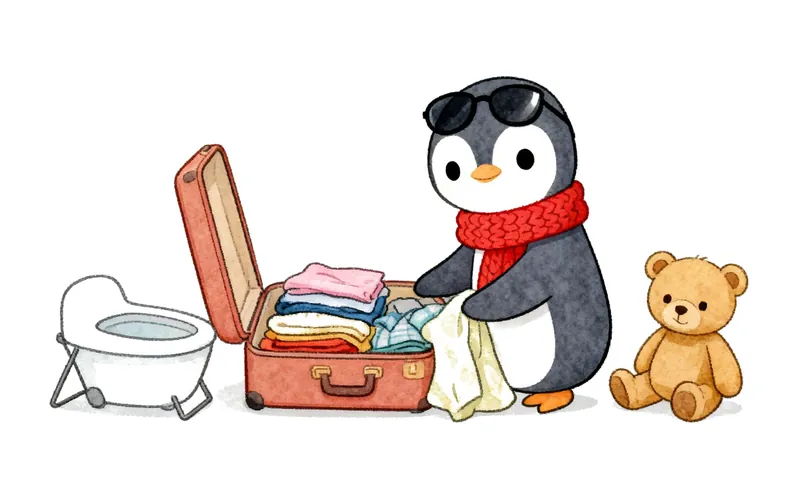
- Keep an outing bag packed with clothes, wipes, bags, a travel potty, and a car seat liner.
- Use three rules: pee before leaving, pee on arrival, pee before a long activity.
- In public restrooms, bring a folding seat, cover automatic flush sensors, and skip hand dryers.
- On trips, keep the same routine; expect a few accidents and don't go back to diapers by default.
On this page
Leaving the house with a child who is learning to use the potty takes a little planning, but it does not have to be stressful. The same routine you use at home can work in a parking lot, a rest stop, or a hotel room. This guide covers what to keep in an outing bag, the three rules that handle most outings, public restrooms, car trips, beach and pool days, and vacations. The goal is to keep things predictable and calm, not perfect.
The outing bag: pack it once and keep it ready
Have a bag that stays packed and lives by the door. That way you are not searching for spare pants while your child dances in the hallway. Include:
- Two complete changes of clothes (pants, underwear, and socks) and, if you can, a spare pair of shoes.
- Wipes and tissues.
- Two bags for wet clothes.
- A travel potty or folding potty seat. Some travel potties use disposable liners.
- An absorbent liner for the car seat.
- Hand wipes or sanitizer, in case there is no sink.
Restock it when you get home so it is ready for the next trip. This bag is your backup, not a sign that you expect failure.
The three rules for outings
These rules cover most situations and give your child a predictable rhythm:
- The going-out pee. Try before leaving the house, even if your child says they do not need to go.
- The arriving pee. When you get somewhere new, find the bathroom and offer it right away.
- The transition pee. Before anything that will absorb their attention—the slide, a movie, a playdate snack—suggest a bathroom stop.
These are offers, not orders. If your child refuses, let it go and try again at the next natural break. For more on what to do when accidents happen, see potty training accidents: what to do and say.
Public restrooms: make them less scary
Public restrooms can be loud, big, and strange. A few moves make them easier:
- Bring the folding potty seat. On a big toilet, falling in is scary.
- If you do not have a seat, hold your child by the waist so they feel secure.
- If the toilet flushes automatically, cover the sensor until your child stands up, and warn them about the noise.
- Hand dryers scare a lot of children. Use paper towels or wipes, and do not push it.
- At this age, always go into the restroom with your child.
If your child is afraid of the toilet or the flush, there are steps you can take to ease that fear. Read more in toddler afraid of the toilet or the flush.
In the car and on the road
Start with a pee right before getting in the car. Put an absorbent liner on the car seat to save cleanup. On long drives, especially in the first few days, stop often. Tell your child ahead of time when the next stop will be: “When we see the gas station, we'll stop for a pee.” A travel potty in the trunk can save the day in parking lots and rest stops.
For a road trip, plan for more stops than you would take on your own. Keep the outing bag within reach so you can grab it at each stop. If your child has an accident, change clothes calmly and move on. For more on daycare and preschool policies, see potty training at daycare and preschool.
Beach, pool, and water play
Cold water makes many children pee. That is not a regression; it is a normal response. Have your child pee before getting in the water and every time they come out for a snack or a break. If the pool requires a swim diaper, use it—it does not count as “going back to diapers.” It is simply a rule for that setting.
Trips and vacations: keep the routine
A trip can bring a few more accidents because of unfamiliar bathrooms, changed schedules, and lots of excitement. Stick with the same plan: the outing routine, the same words, and patience with the changes. If the trip falls right at the start of potty training, consider pushing the start until you are home. If you have already started, do not go back to daytime diapers; stick with the outings routine.
On a plane, train, or bus, pee right before boarding and find the bathroom as soon as you get on. Airplane toilets have a very loud flush: flush after your child has stepped out. When you arrive at your destination, first thing, show your child where the bathroom is and put the potty somewhere they can see it. For sleeping, use the nighttime diaper as you would at home, or a portable mattress protector if your child no longer wears one. When you get back home, pick the routine right back up. A couple of days with more accidents is normal.
What to say: “There's a bathroom here too. Shall we go find it?” or “On our trip, we pee at every stop, like explorers.”
What to avoid
Some approaches backfire when you are out and about. Avoid scolding or shaming your child for an accident—it happens, especially in new places. Do not force them to sit on a public toilet if they are scared; offer a travel potty or hold them. Avoid comparing them to other children who “never have accidents.” And do not use bribes or treats to get them to use the bathroom on the go; it can create pressure. Keep the tone matter-of-fact and supportive.
If your child has hard or painful poops, holds poop, or has constipation, blood, or pain when peeing, talk to your pediatrician. Also call the pediatrician if your child was dry and starts having accidents again, or if an older child starts wetting at night after being dry.
Questions parents ask
What should I pack in a potty training outing bag?
Pack two complete changes of clothes (pants, underwear, socks) and a spare pair of shoes if you can, wipes and tissues, two bags for wet clothes, a travel potty or folding potty seat, an absorbent liner for the car seat, and hand wipes or sanitizer. Keep the bag packed and by the door so it is always ready.
How do I handle public restrooms with a toddler who is potty training?
Bring a folding potty seat so your child feels secure on a big toilet. If you do not have one, hold them by the waist. Cover the sensor on automatic flushes until they stand up, and warn them about the noise. Skip hand dryers if they are scared, and always go into the restroom with your child.
What if my child has an accident during a road trip?
Stay calm and matter-of-fact. Change their clothes, put the wet ones in a bag, and continue. Have a car seat liner in place to make cleanup easier. Stop often on long drives, especially in the first few days, and tell your child when the next stop will be.
Should we use swim diapers at the pool during potty training?
If the pool requires swim diapers, use them. It does not count as going back to diapers; it is a rule for that setting. Have your child pee before getting in the water and every time they come out for a break.
How do we handle potty training on vacation?
Keep the same outing routine: pee before leaving, pee on arrival, and pee before activities. Expect a few more accidents because of unfamiliar bathrooms and schedules. Do not go back to daytime diapers by default. When you get home, pick the routine right back up.
These guides are general information for parents. They do not replace your pediatrician's advice: if something worries you, ask.