In short
- Spend 10 to 15 minutes a day for the week before you start; diapers stay on.
- Choose your family's words for pee, poop, and potty, and use them every time.
- Put the potty out early, read potty books, and try short sits with no pressure.
- Tell caregivers the start date and your calm response to accidents.
On this page
The week before you start potty training is not about results. It is about making the potty familiar, putting words to what bodies do, and letting your child know what is coming. Set aside 10 to 15 minutes a day. The diapers stay on for now. By day one, the potty should already be a normal object in the bathroom, and your child should have heard the words pee, poop, and potty enough times that they are not new.
Choose your family's words first
Decide now what you will call everything, and use the same words every time: pee, poop, potty, toilet, underwear. For body parts, use your family's words and, if you can, the correct ones too: penis, vulva, bottom. Avoid words that sound like blame, such as "gross," "yucky," "dirty," or "stinky." Poop is not bad. It just goes in the toilet.
Once you have your words, everyone who cares for your child should use them too. That includes your partner, grandparents, and daycare teachers.
Introduce the potty early and let them explore
Put the potty in the bathroom where your child can see it, with a book next to it. If your home is big, a second potty near where they play helps. Let them touch it, sit on it with clothes on, and open and close the lid. There is no schedule yet.
A few days in, try a short sit. One minute with a book is plenty. Clothes on, or diaper off before bath time. If they do not want to sit, that is fine. Say, "It's your potty. You can sit on it whenever you want." The goal is comfort, not a pee in the potty.
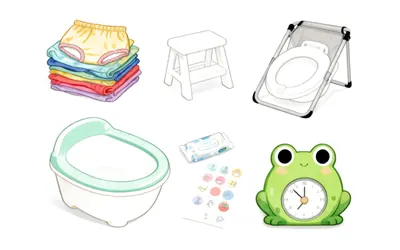
If you have not chosen a potty yet, see what you need to start potty training for a simple list. A sturdy potty with a wide base and flat feet is enough.
Use books and pretend play
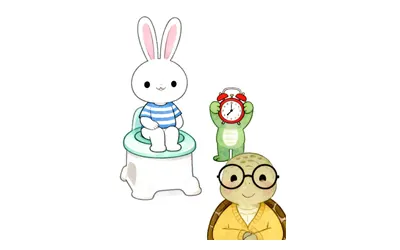
Read a potty book together and let your child turn the pages. Two or three books are plenty. Sit a stuffed animal on the potty and pretend it pees, then celebrate: "Great job, Teddy! You listened to your body." Pretend play lets your child try the idea without any pressure on themselves.
You can also let them watch you. Children learn by copying. If they follow you into the bathroom, say in a matter-of-fact way, "I'm peeing in the toilet. Then I wash my hands."
Name the signs and watch the poop
During the week, notice when your child goes still, hides, turns red, or squats to poop. Say it gently: "I think your body is doing a poop. Your body tells you." You are teaching them to connect the feeling with the word.
Look at the poop itself. Ideally it is soft and they go at least every other day. If it is hard, comes out like little pellets, or hurts them, mention it to your pediatrician before day one. A child who has painful poops may hold them in, and that makes learning harder.
If you can, let them spend about 30 minutes at home without a diaper after a pee or after bath time. If something comes out, stay calm: "Look, pee. Next time we'll do it in the potty."
Tell caregivers what is coming
This week, talk to daycare, the grandparents, and the babysitter. Tell them the date you are starting, the words you use, and how you will react to accidents: calmly, with no punishment and no shame. Ask them to use the same words and the same calm tone. If your child is in daycare, ask how they handle potty sits and accidents so you can keep things consistent.
The night before day one
You do not start today. Today you get the house, your head, and the conversation ready.
The house
- Potty in the bathroom with a book next to it, and a second potty near the play area if your home is big.
- Rugs rolled up, and a disposable pad or towel on the couch.
- Underwear in a drawer at your child's height so they can grab a pair.
- A timer set up, and easy food for the first three days.
Your head
Read this twice: tomorrow there will be accidents. Maybe lots. They are expected. Your job is not to prevent every accident. Your job is to stay calm, invite your child to try, and celebrate every small step. If you lose your cool, breathe, apologize if you need to, and keep going. If there are two adults, take shifts. If you are on your own, plan breaks during nap time and set up quiet activities ahead of time.
The conversation
Pick a calm moment. Keep it short and clear: "Tomorrow is a special day. We're going to put the daytime diapers away. You're going to wear your new underwear. When your body tells you that you need to pee or poop, we'll run to the potty. At first some pee will come out, and that's okay: that's how we learn. I'll be helping you the whole time."
Then explain what stays the same: "For naps and for sleeping at night, you'll still wear a diaper for now."
Saying goodbye to diapers
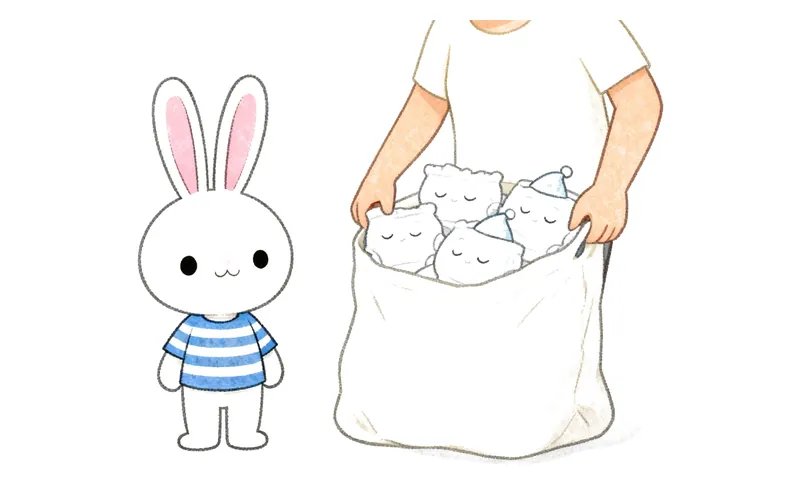
Put the daytime diapers in a bag together and store them out of sight: "The daytime diapers are going to take a rest." If a new baby is on the way, do not say the diapers are "for the baby." Your child may feel the baby is taking something away from them.
What to avoid during prep week
- Do not pressure or force sits. If your child refuses, drop it and try again another day. Forcing a sit turns the potty into a battle.
- Do not use shame or disgust. No "gross," no disgusted faces, no "you're a big kid now" as a way to push.
- Do not compare with cousins, siblings, or friends. Every child goes at their own pace.
- Do not use absorbent training pants during the day once you start. They absorb so much that your child does not feel wet, and feeling it is part of learning. For naps and nighttime, a diaper is fine.
- Do not go back and forth between diapers and underwear during the day. It confuses children. The only exceptions are naps and nighttime.
If you are still deciding whether your child is ready, when to start potty training walks through the signs to look for. When you are ready for day one, how to potty train a toddler gives you a calm day-by-day plan.
Questions parents ask
How long before starting potty training should I introduce the potty?
Introduce the potty about a week before you plan to start. Put it in the bathroom where your child can see and reach it, and let them explore it with clothes on. This early familiarity makes the potty a normal object rather than something new and scary on day one.
What if my child refuses to sit on the potty during the prep week?
That is common and not a problem. Do not force it. Offer a short sit with a book, and if they say no, say, "It's your potty. You can sit on it whenever you want." Try again another day. The goal this week is comfort, not cooperation.
Should I use training pants or diapers during the day when we start?
Once you start, skip absorbent training pants during the day. They absorb so much that your child does not feel wet, and feeling wet is part of learning. For naps and nighttime, a diaper is fine. Going back and forth between diapers and underwear during the day can confuse children.
How do I know if my child's poop is ready for potty training?
Ideally, poop is soft and your child goes at least every other day. If it is hard, comes out like little pellets, or hurts them, mention it to your pediatrician before you start. A child who has painful poops may hold them in, which makes learning harder.
What should I tell daycare or grandparents before we start?
Tell them the date you are starting, the words you use for pee, poop, and potty, and how you will react to accidents: calmly, with no punishment and no shame. Ask them to use the same words and the same calm tone. Consistency between home and care helps your child feel secure.
These guides are general information for parents. They do not replace your pediatrician's advice: if something worries you, ask.