In short
- Stool withholding is common: a hard poop hurts, so your child holds the next one.
- Signs include crossing legs, going on tiptoe, hiding, or going still.
- Keep poops soft and pressure low; let your child poop in a diaper if that helps.
- Call the pediatrician for pain, blood, hard poops, or fewer than three poops a week.
On this page
Your toddler was doing fine with potty training, and then poop became a problem. Maybe they hide behind the couch, cross their legs, or cry when they feel a bowel movement coming. This is called stool withholding, and it is one of the most common potty training snags. The good news is that it makes sense, and there is a calm way through it.
Why toddlers hold in poop
A toddler holds in poop for a few reasons, and often more than one at once:
- Fear of pain. A hard poop hurt once, so your child holds the next one in. But the longer it stays inside, the harder and bigger it gets, and the more it hurts. That is the cycle.
- Habit. Poop has always gone in a diaper, often while standing or hiding.
- Fear of the poop going away. Some children see the poop as part of their body, and watching it disappear down the toilet is unsettling.
- Control. At this age, poop is one of the few things your child gets to decide.
- Position. Sitting with legs dangling makes pooping harder.
Understanding the reason helps you respond in a way that breaks the cycle instead of feeding it.
How to tell your toddler is holding in poop
A child who is holding in poop often looks like they are trying to push it out, but they are actually pushing to keep it in. Watch for:
- Going up on tiptoe or crossing their legs
- Going stiff, arching their back, or clenching their bottom
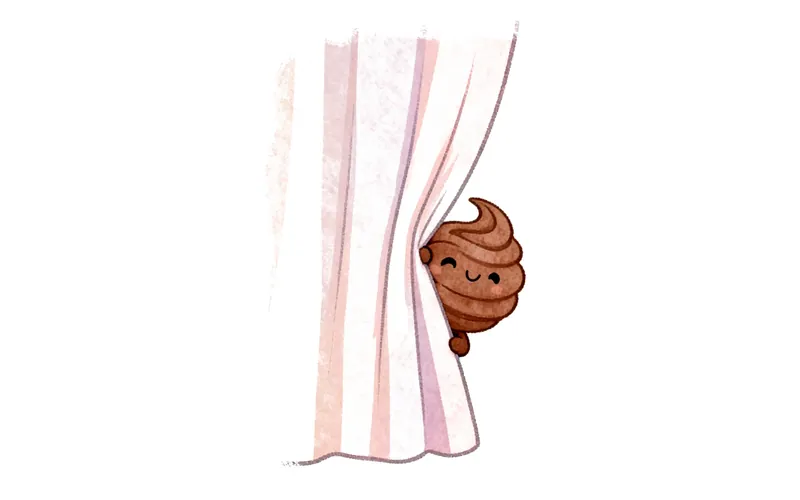
- Hiding in a corner or going still and looking worried
- Crying or getting angry when the poop is coming
These signs can show up at any time, not just during potty sits. If you see them, you know your child is uncomfortable, and you can respond with calm rather than pressure.
What helps at home
Talk to your pediatrician first if there is constipation
If the poop is hard, like little balls or very large, if it hurts, if there is blood on the toilet paper, or if your child goes fewer than three times a week, start with a call to your pediatrician. The doctor will decide whether treatment is needed. Do not give any remedy on your own.
Let poop go wherever your child feels safe for now
If your child asks for a diaper to poop, give it to them. A poop in the diaper is far better than a poop held in. Keep the big-kid underwear for pee. You can say, “Poop can come out in the diaper. What matters is that it comes out.”
Move the diaper closer to the bathroom, step by step
Once your child is pooping regularly in a diaper, you can slowly bring the diaper closer to the potty. Try these steps, spending a few days on each or as long as your child needs:
- Poop in a diaper wherever your child likes.
- Poop in a diaper, but inside the bathroom.
- Poop in a diaper while sitting on the potty.
- Poop on the potty with the diaper open underneath.
- Poop on the potty without a diaper.
No rush. If your child resists a step, stay on the previous one a little longer.
Set up a calm daily potty sit
Offer a five-minute sit after breakfast or lunch, with feet supported and knees a little higher than the hips. On the big toilet, use a step stool. Bring a book, bubbles, or a song. If something comes out, celebrate calmly. If not, say, “Another day.” The goal is a relaxed routine, not a result.
Make it easy on the gut
Serve a variety of foods with fruit, vegetables, beans, and whole-grain bread or cereal. Offer water throughout the day. Encourage lots of moving and playing. This helps keep things regular, though if there is already constipation, food alone usually is not enough.
Take the fear out of poop
Read books about poop. Wave bye-bye when you flush. If watching the poop disappear bothers your child, wait to flush until they have left the bathroom.
Praise what is up to your child
Notice and praise the parts your child controls: sitting on the potty, telling you they need to go, letting the poop come out. Do not praise only the result.
What to say
- “Your poop wants to come out. If you let it out every day, it comes out soft and doesn't hurt.”
- “Feet on the step, soft tummy, and let's blow.”
- “You can do it in the diaper. What matters is that it comes out.”
What to avoid
Some responses make withholding worse, even when they come from frustration:
- Making your child sit until something comes out
- Scolding them for pooping in their underwear
- Getting angry because they ask for a diaper
- Giving remedies without checking with the doctor
- Comparing them to siblings or friends who poop on the potty
If you are feeling stuck, it can help to step back from potty training for a bit. See when to stop potty training and take a break for signs that a pause would help. And if your child was previously pooping on the potty and has started holding again, read about potty training regression to understand what might be behind it.
When to see the pediatrician
Call your pediatrician if your child has:
- Hard, large, or pellet-like poop, or fewer than three poops a week
- Pain or crying when pooping, or blood in the poop or on the toilet paper
- Holding in poop with real distress
- Frequent poop staining in their underwear without noticing
- Tummy aches that come and go, or poor appetite
Call the same day if your child has a very swollen tummy and is vomiting, or is in a lot of pain.
If your child is afraid to poop on the potty but not holding it in, see toddler refuses to poop on the potty for more ideas.
Questions parents ask
How can I tell if my toddler is withholding poop?
Watch for signs like crossing legs, going up on tiptoe, going stiff, hiding, or crying when a poop is coming. It can look like they are pushing to get it out, but they are actually pushing to keep it in.
Should I let my toddler poop in a diaper if they ask?
Yes. A poop in the diaper is better than a poop held in. Keep the diaper for poop while you work on pee in the potty, and slowly move the diaper closer to the bathroom over time.
When should I call the pediatrician for stool withholding?
Call if the poop is hard, large, or pellet-like, if it hurts, if there is blood, or if your child goes fewer than three times a week. Also call if your child is in real distress or has frequent poop staining in their underwear.
Can constipation cause potty training problems?
Yes. A hard poop can hurt, so a child holds the next one, which makes it harder and more painful. If you suspect constipation, talk to your pediatrician before starting or continuing potty training.
What if my child was potty trained and now holds in poop?
Regression can happen for many reasons, including fear or a change in routine. Go back to the basics, keep poops soft, and avoid pressure. If it continues or comes with pain, call your pediatrician.
These guides are general information for parents. They do not replace your pediatrician's advice: if something worries you, ask.