In short
- Poop is different from pee: it has to be let go, and fear or a past hard poop can make a child hold it in.
- If your child asks for a diaper to poop, give it. A poop in the diaper beats a poop held in.
- Move closer to the potty in small steps, with feet supported and a calm five minutes after meals.
- Hard, painful, or infrequent poops need a pediatrician's visit, not a home remedy.
On this page
Pee is going fine. The underwear stays dry. Then your toddler disappears behind the couch, goes stiff, and asks for a diaper. Or they poop in the diaper standing up and refuse to come near the potty for it. This is one of the most common potty training snags, and it has its own plan. Poop is not a harder version of pee; it asks something different of a child, and pushing usually makes it worse.
Why pee works and poop does not
Poop feels different in the body. Pee comes out on its own, but poop has to be let go, and for a toddler that can feel like losing a part of themselves. Some children are unsettled watching it disappear down the toilet. Others had one hard poop that hurt, and now they hold it in so it will not happen again. The longer they hold, the harder and bigger it gets, and the more it hurts the next time. That is the cycle to break.
Habit plays a part too. Poop has always gone in a diaper, standing up or hidden in a corner. And control matters: at this age, pooping is one of the few things a child gets to decide. Position matters as well. With legs dangling, pooping is harder than it needs to be.
How to tell they are holding it
They go up on tiptoe, cross their legs, go stiff or arch their back, clench their bottom, or hide in a corner looking worried. They may cry or get angry when the poop is coming. It looks like they are pushing to get it out, but they are pushing to keep it in. If you see this, ease the pressure rather than push the potty.
The bridge: from diaper to potty, one step at a time
If your child asks for a diaper to poop, give it. A poop in the diaper is far better than a poop held in. Keep the underwear for pee and let poop stay where it feels safe for now. Then move closer to the potty in small steps. A few days for each step, or as long as your child needs.
- Poop in a diaper wherever they like, as they do now.
- Poop in a diaper, but inside the bathroom.
- Poop in a diaper while sitting on the potty.
- Poop on the potty with the diaper open underneath.
- Poop on the potty without a diaper.
Say the plan out loud so it feels predictable: “Poop can come out in the diaper. What matters is that it comes out.” If your child is also refusing to sit at all, the ideas in toddler refuses to sit on the potty help with that separate problem.
Set up the potty so pooping is easier
Timing and position do a lot of the work.
- Try five minutes after breakfast and after lunch. Many children poop after a particular meal. If you notice a pattern, invite them right at that moment.
- Support the feet. On the big toilet, use a step stool so the knees sit a little higher than the hips. On a floor potty, make sure the feet rest flat.
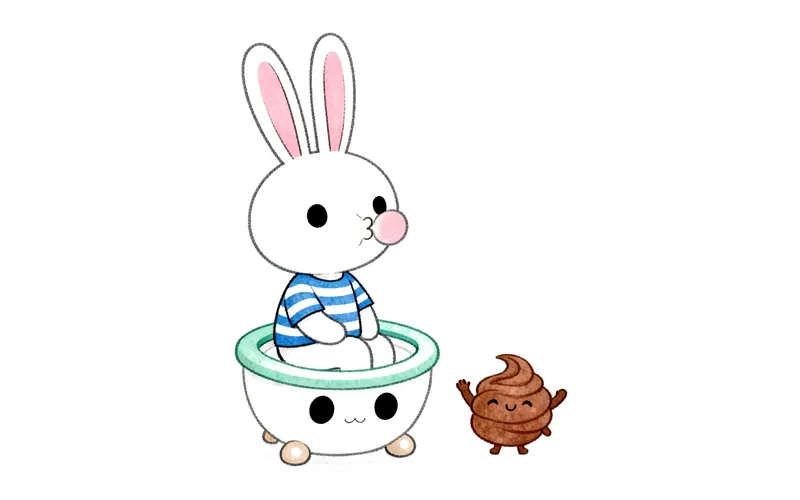
- Keep it calm. A book, bubbles, or a song. No screens, no rush, no sitting until something comes out.
- Give privacy. Many children need it for poop. Leave the door ajar or turn your back.
- Celebrate what is up to them: sitting, telling you, letting it come out. Not just the result. If something comes out, a calm little party. If not, “another day.”
What to say
- “Your poop wants to come out. If you let it out every day, it comes out soft and doesn't hurt.”
- “Feet on the step, soft tummy, and let's blow like you're blowing out candles.”
- “You can do it in the diaper. What matters is that it comes out.”
Keep the gut moving
Varied food with fruit, vegetables, beans, and whole-grain bread or cereal helps. Water throughout the day and lots of moving and playing help too. These habits support a regular rhythm, but if constipation has already started, food alone usually is not enough. That is a question for your pediatrician, not something to treat on your own.
Make friends with poop where you can. Books about poop help. Wave bye-bye when you flush. If watching it disappear bothers your child, wait to flush until they have left the bathroom.
What tends to backfire
Some responses make holding more likely, not less.
- Making them sit until something comes out.
- Scolding them for pooping in their underwear or getting angry because they ask for a diaper.
- Giving remedies or supplements without checking with the doctor.
- Comparing them with a sibling or a friend who poops on the potty.
- Turning the potty into a battle. If every sit turns into a standoff, the approach in when your toddler says no: potty training power struggles can lower the temperature.
If you see the signs of holding, the details in poop withholding in toddlers help you tell the difference between a child who is not ready and a child who is scared.
When to call the pediatrician
Call if the poop is hard, large, or pellet-like, or if your child poops fewer than three times a week. Call if pooping hurts, if they cry when pooping, or if there is blood in the poop or on the toilet paper. Call if they hold poop in with real distress, or if you see frequent poop staining in their underwear without them noticing. Tummy aches that come and go, or a poor appetite, are also reasons to check in.
Do not wait if their tummy is very swollen and they are vomiting, or if they are in a lot of pain. Same-day call.
A step back with poop is not a failure. It is a bridge, and your child crosses it at their own pace.
Questions parents ask
Why will my toddler pee on the potty but not poop?
Pee comes out on its own, but poop has to be let go, and that can feel scary or like losing a part of themselves. A past hard poop that hurt, a strong diaper habit, or wanting control can all make a child hold poop in. It is very common and has its own step-by-step plan.
Should I let my toddler poop in a diaper if they ask?
Yes. A poop in the diaper is far better than a poop held in, which can lead to constipation. Keep the underwear for pee and let poop stay where it feels safe for now. Then move the diaper closer to the bathroom and the potty in small steps.
How do I know if my toddler is holding their poop in?
They may go up on tiptoe, cross their legs, go stiff or arch their back, clench their bottom, or hide in a corner looking worried. They might cry or get angry when the poop is coming. It looks like pushing to get it out, but they are pushing to keep it in.
When should I call the pediatrician about my toddler's poop?
Call if the poop is hard, large, or pellet-like, or if your child poops fewer than three times a week. Also call if pooping hurts, if they cry when pooping, or if there is blood in the poop or on the toilet paper. Do not wait if their tummy is very swollen and they are vomiting, or if they are in a lot of pain.
What can I say to help my toddler poop on the potty?
Keep it calm and specific: “Your poop wants to come out. If you let it out every day, it comes out soft and doesn't hurt.” Try “Feet on the step, soft tummy, and let's blow like you're blowing out candles.” And “You can do it in the diaper. What matters is that it comes out.”
These guides are general information for parents. They do not replace your pediatrician's advice: if something worries you, ask.